VCARD
Designing a Virtual Card MVP in Four Days
An AI-Augmented Product Design Workflow
Overview
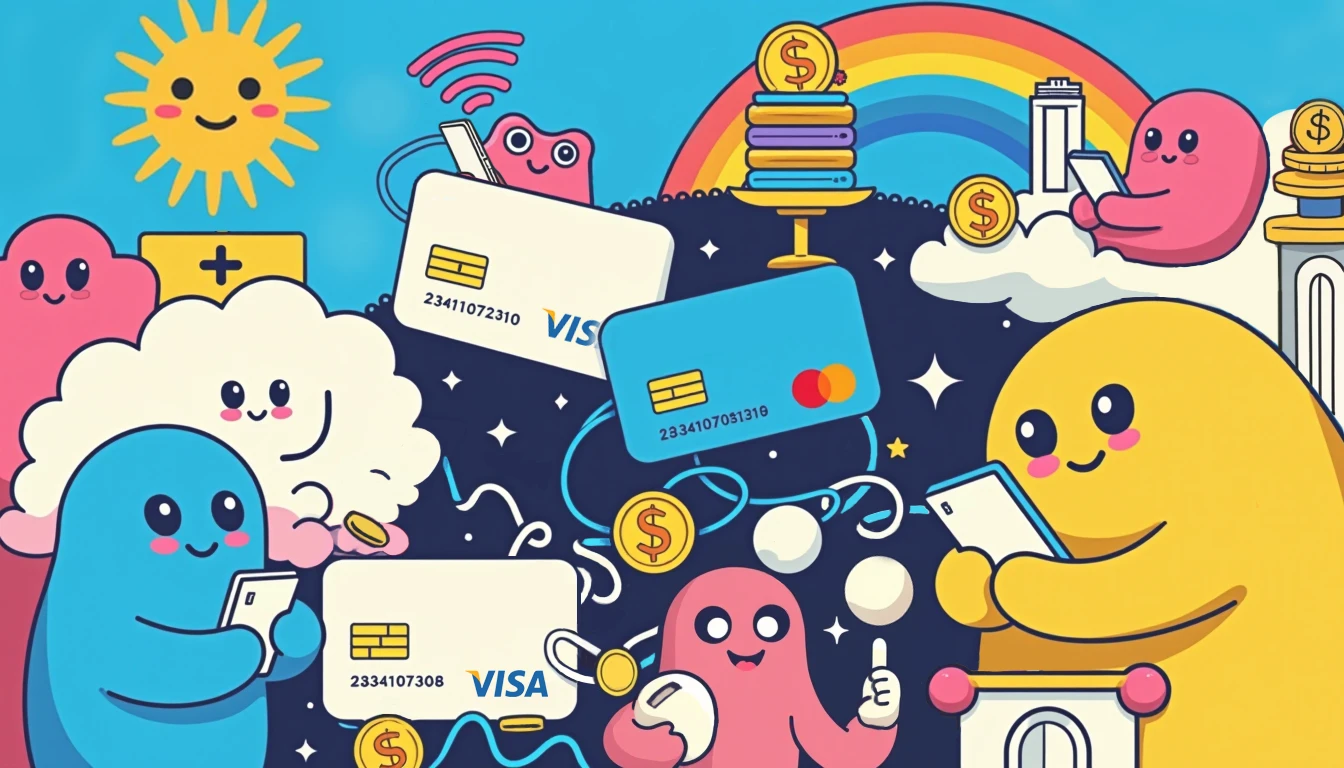
VCard is a virtual card solution that helps users manage online payments, subscriptions, and international transactions with greater privacy and control. Users can create single-use or recurring virtual cards, hold funds in multiple currencies, and keep their primary bank account details protected.
In the MVP, users can create up to five virtual cards in EUR or USD, fund them via bank transfer, debit card, or cryptocurrency, and instantly freeze cards when needed. The product also supports ordering a physical card for in-store purchases and ATM withdrawals.
The Challenge
The team needed to define and validate a virtual card experience for a multi-currency payment platform.
At the start of the project, requirements were incomplete, core feature priorities were still under discussion, multiple stakeholders had conflicting assumptions, and the delivery timeline allowed little room for traditional sequential discovery and design processes.
The goal was to rapidly align the team, define a realistic MVP scope, and deliver implementation-ready designs without sacrificing product quality.
CLIENT
AltDev
My Role
Senior Product Designer
Ownership
Product Discovery & UX Research
AI-Augmented Design Workflow
UI Design & UI KIt
Prototyping & Developer Handoff
AI-Assisted Product Design Workflow
Instead of relying on a single tool, I used different AI systems for different stages of product design.
Discovery
Competitor analysis, feature inventory, UX pattern synthesis

ChatGPT
Product Definition
Requirement clarification, edge-case discovery, flow planning
ChatGPT
Visual Exploration
Multiple UI concepts, interaction patterns, and design directions

Claude Design
Visual Assets
Product imagery, illustrations, and presentation assets

ComfyUI
Design Production
Production-ready flows, components, design systems, and prototypes

Codex, Figma
Handoff
Specifications, developer documentation, and acceptance criteria
Codex
Discovery & Research
Turning Market Research into Product Decisions
The project began with understanding how successful virtual card products approached security, funding, subscriptions, and card management.
Rather than manually collecting and comparing dozens of examples, I used ChatGPT to accelerate research synthesis. AI-assisted research activities included competitor analysis, feature inventory creation, UX pattern identification, user flow comparisons, security and privacy benchmarking, and subscription management patterns. The output was a structured understanding of industry standards and opportunities for differentiation.
Deliverables included a competitive feature matrix, MVP feature recommendations, a user journey map, and initial product assumptions.
Product Definition
Key MVP Decisions
Using ChatGPT as a thinking partner, I transformed fragmented stakeholder input into a prioritized MVP scope. Activities included requirement clarification, flow mapping, edge-case discovery, feature prioritization, complexity assessment, and trade-off analysis. This process helped align stakeholders around a realistic first release while preserving room for future expansion.
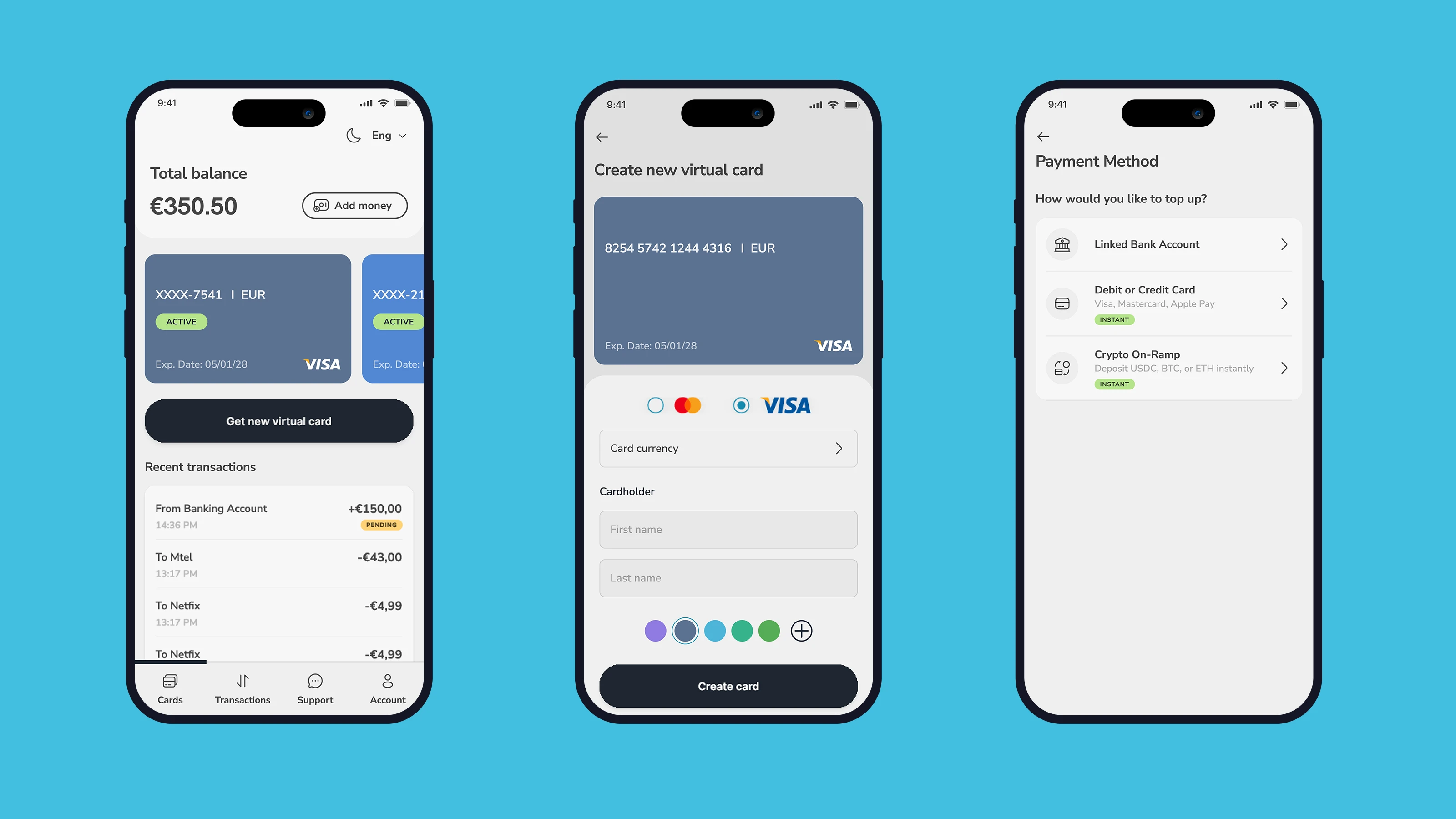
The first version focused on virtual card creation, card funding, balance visibility, security controls, and multi-currency support. Advanced financial management capabilities were intentionally deferred to later releases.
Concept Exploration
Exploring Multiple Design Directions in Parallel
Traditional workflows often force teams to invest heavily in one direction before receiving stakeholder feedback. AI-assisted exploration allowed several approaches to be evaluated simultaneously, reducing decision risk and accelerating alignment.
Once the product structure was defined, I moved into interface exploration. Instead of committing immediately to a single visual direction, I used Claude Design to generate multiple concept variations based on the approved user flows. This enabled rapid comparison of information hierarchy, navigation models, card management patterns, visual styles, and trust and security communication.
I evaluated AI generated options against business goals, user needs, fintech usability standards, accessibility requirements, and technical constraints. Only validated concepts moved forward into production design.
Design Production
From Concepts to Product Experience
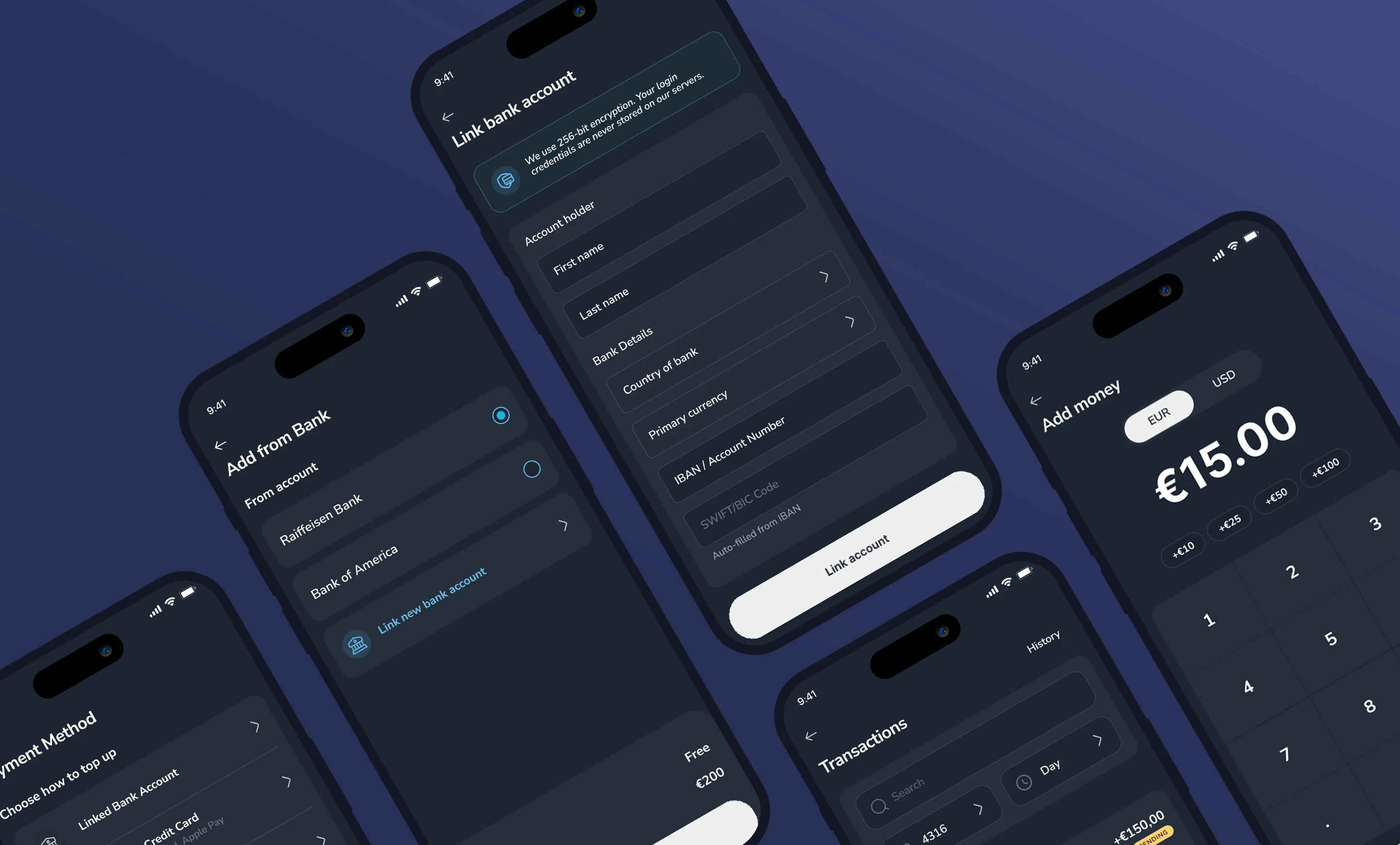
After selecting a direction, I refined the experience inside Figma and translated exploratory concepts into a cohesive product flow. The final product experience was manually refined to ensure consistency, clarity, and implementation feasibility.
Design activities included screen design, interaction patterns, reusable components, and a clickable prototype.
UI Design & Component Library
Scaling Beyond the MVP
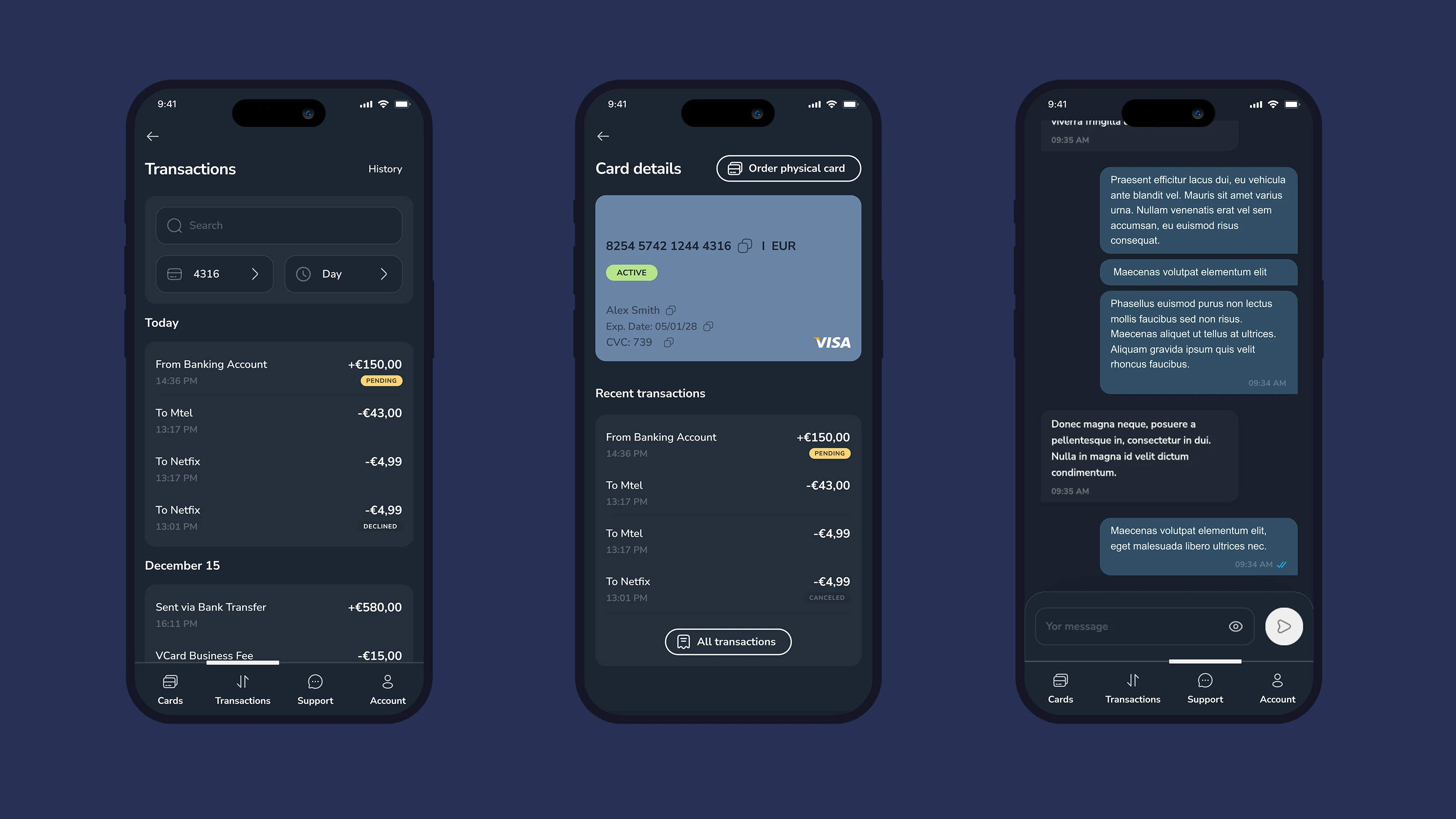
Even though the goal was an MVP, the feature needed a reusable UI foundation that could support future growth and keep the experience consistent as new functionality was added.
I used Codex to accelerate component planning and documentation. AI-assisted work included component inventory generation, state identification, variant mapping, token recommendations, and developer reference preparation.
As a result, the project established a reusable component library and UI foundations that improved consistency and made future feature expansion easier.
Developer Handoff
From Design to Implementation
Once the designs were approved, I used ChatGPT and Codex to prepare implementation-ready documentation, reducing manual effort and improving communication with developers. Deliverables included component specifications, interaction documentation, and developer handoff notes.
Outcome
The project was delivered within four working days despite evolving requirements and an unusually compressed timeline. The result was a validated MVP concept, scalable design foundations, and implementation-ready assets that developers could immediately begin building.
By combining traditional product design practices with AI-assisted research, exploration, and documentation, the team was able to move significantly faster without compromising product quality.
Reflection - What AI Changed
AI did not replace research, product thinking, or design judgment. Its greatest value was accelerating discovery, exploration, and documentation, allowing more time to focus on strategic decisions and experience quality.
The most important skill was not prompting individual tools, but orchestrating multiple AI systems into a cohesive workflow while maintaining ownership of product decisions.
For this project, ChatGPT accelerated discovery and product definition, Claude Design expanded concept exploration, and Codex supported documentation and implementation planning. Together, they enabled faster delivery and broader exploration without compromising product quality.
Case studies shaped around trust, decision clarity, and operational scale.