PIASTRIX
Unifying Global Digital Payments
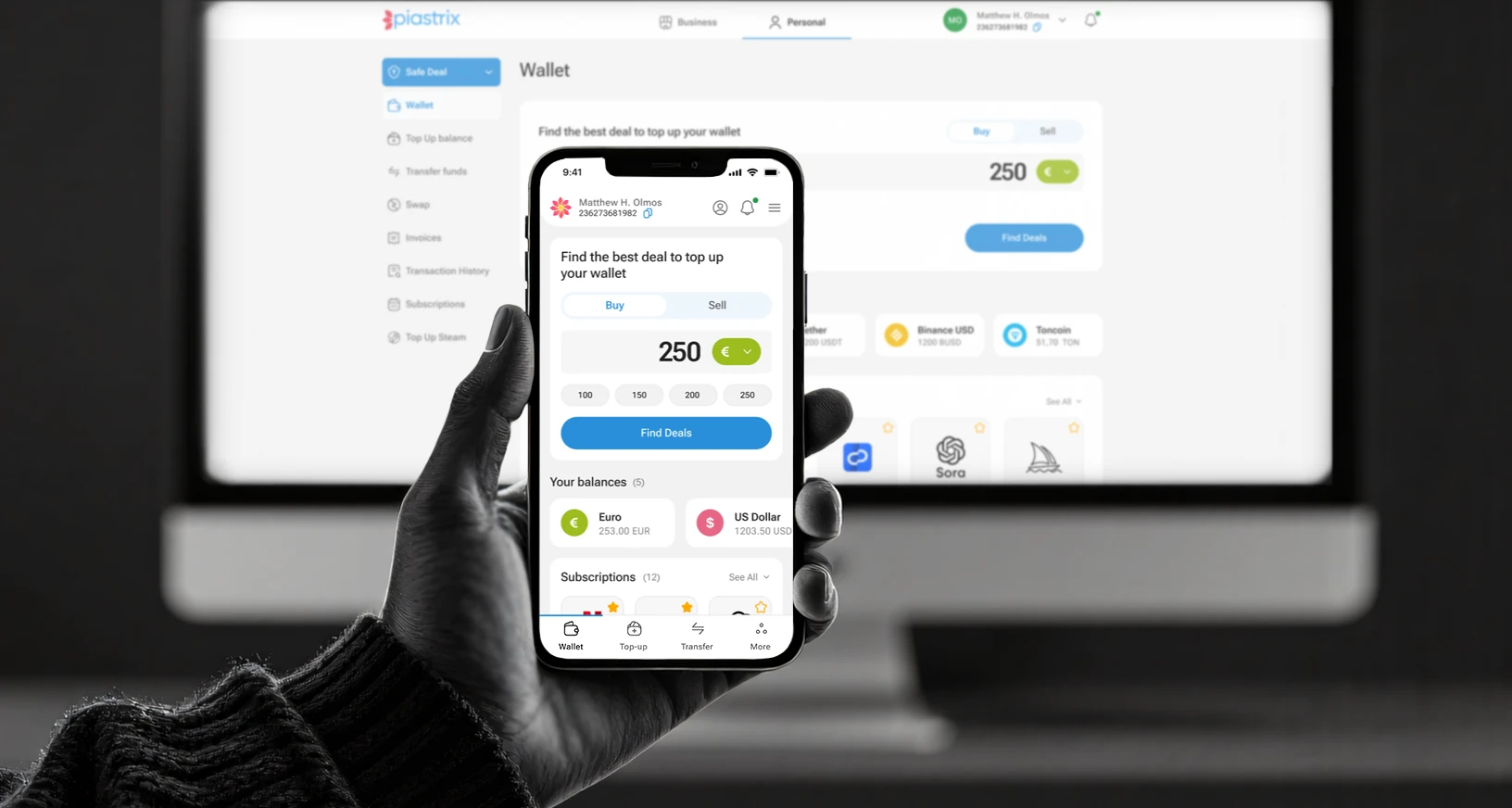
Piastrix is a virtual wallet built for friction-free global transactions. Registration requires just an email, after which you can send money, pay bills, and fund services through one interface. Top up via bank cards, online banking, or cash terminals. The app supports currency exchange and online gaming payments, with multiple currencies in one account and transparent history. Multi-level security and encryption work quietly in the background. Available on Android and iOS.
Project Goal
The existing design worked on desktop, but on mobile, it felt like a tight squeeze. The goal was straightforward: rebuild every screen with a mobile-first mindset, then codify the results into a design system built on two principles—compactness and visual simplicity.
My Responsibilities
As the lead on this project, I owned the end-to-end design process — from user research and validation to documenting solutions and delivering high-fidelity UI. I contributed to the design system and worked cross-functionally to ensure every decision aligned with Piastrix's product goals.
CLIENT
AltDev
Years
2026
My Role
Senior Product Designer
Ownership
UX Research
UX Design & Testing
UI Design & Design System Management
Interactive Prototyping
Compact & Clear: Rebuilding Piastrix for
the Mobile Wallet War
Picture this: You’re at a crowded coffee shop, line moving, and you just need to split a bill and top up your gaming wallet in seconds. But instead of tapping and paying, you’re scrolling, zooming and squinting — buttons tiny, text cramped. For Piastrix users, this friction was becoming the norm. Users needed a global wallet instantly navigable from a phone—whether exchanging currency or checking history.
So my mission became my guiding principle: strip away the desktop legacy and rebuild every screen from the ground up for compactness and visual simplicity. We weren't making a smaller desktop interface; we were engineering a streamlined mobile experience where every tap feels purposeful, and dense financial information lands without cognitive load. Because in a financial app, the wallet is the scenario—and it shouldn't feel like a maze of menus.
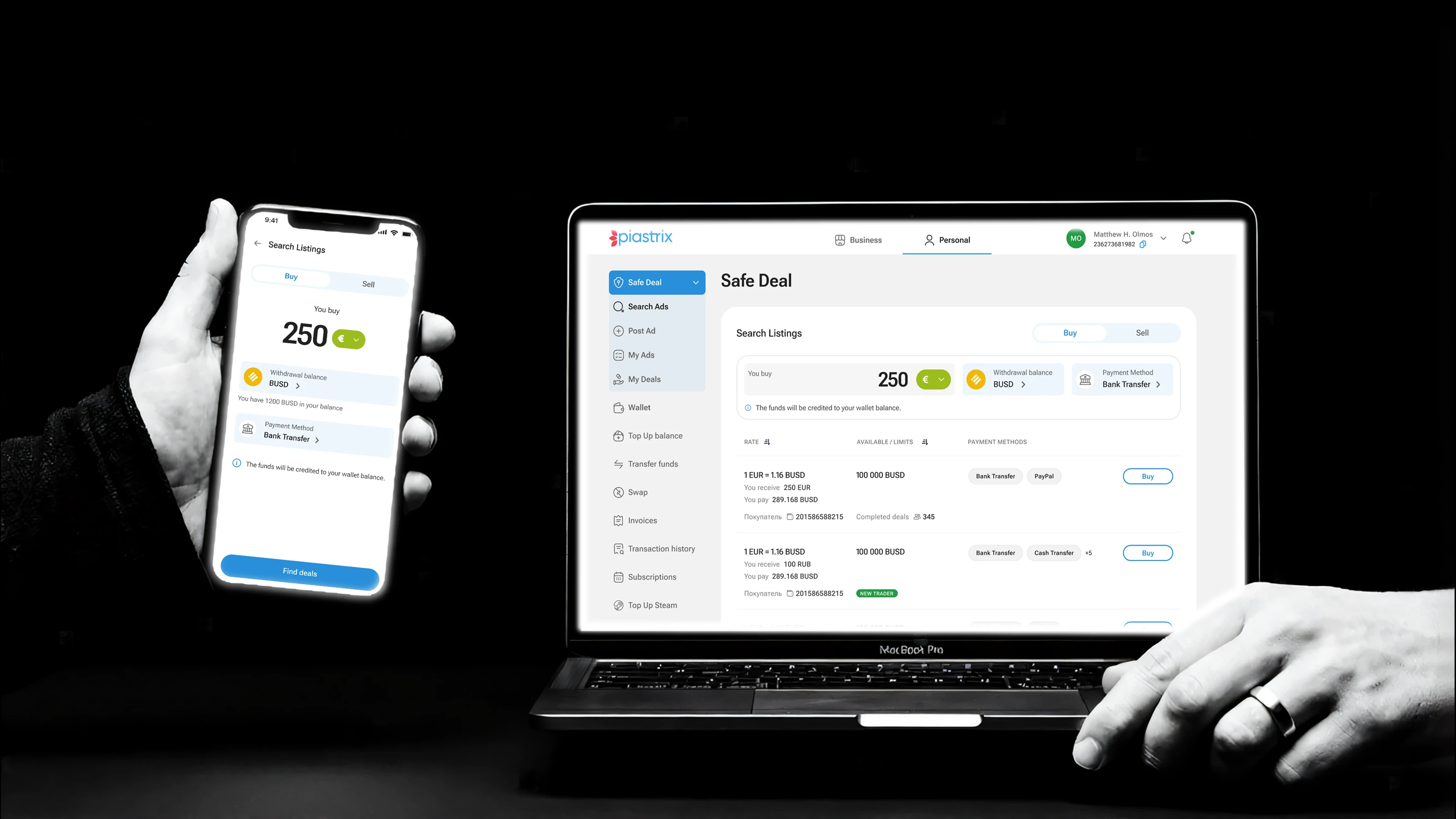
The Design Principles That Made It Work
To achieve this, we established and adhered to several critical design principles:
Mobile-First Information Architecture: We audited every user flow—sending money, paying bills, funding services — and rebuilt the navigation for one-handed use. The most critical actions (top-up, send, exchange) were placed within easy thumb reach.
Visual Simplicity as Security: We replaced dense text and small buttons with a clear visual hierarchy and ample negative space. This wasn't just aesthetic; it reduced errors. When you’re confirming a currency exchange, clarity is a security feature.
Translating into a Design System: Every button, card, and typographic choice was documented in a unified design system. This ensured that the new principles of compactness and simplicity would scale consistently across different devices, now and in the future.
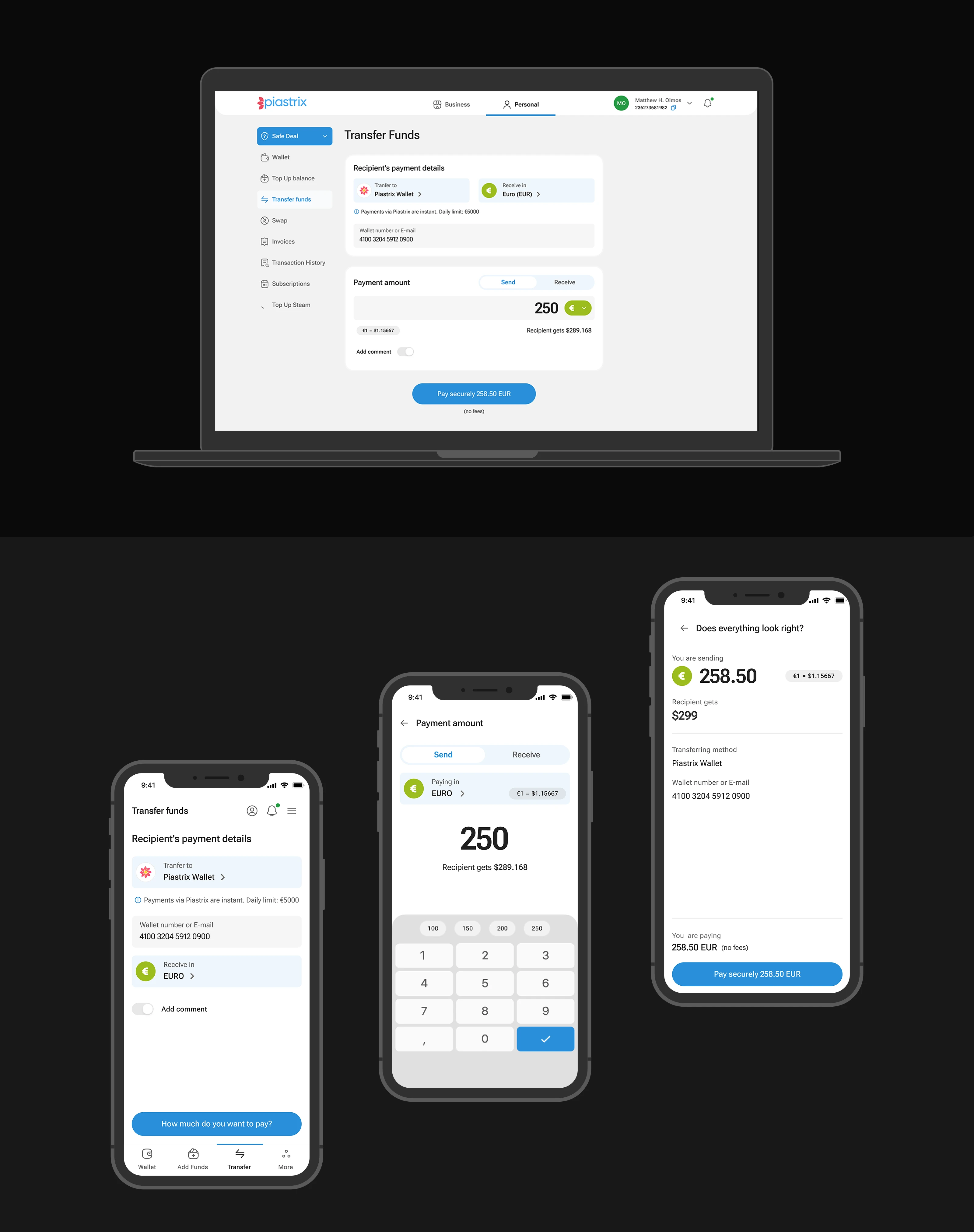
Case studies shaped around trust, decision clarity, and operational scale.