Overview
IT2G is an IT integrator specializing in large-scale enterprise and government software solutions. The company delivers end-to-end digital products for public-sector organizations, covering business analysis, system architecture, software development, modernization of legacy systems, and ongoing technical support.

My work focused on two enterprise platforms:

IS PRO — a citizen inquiry management platform used by government operators processing public requests and appeals.

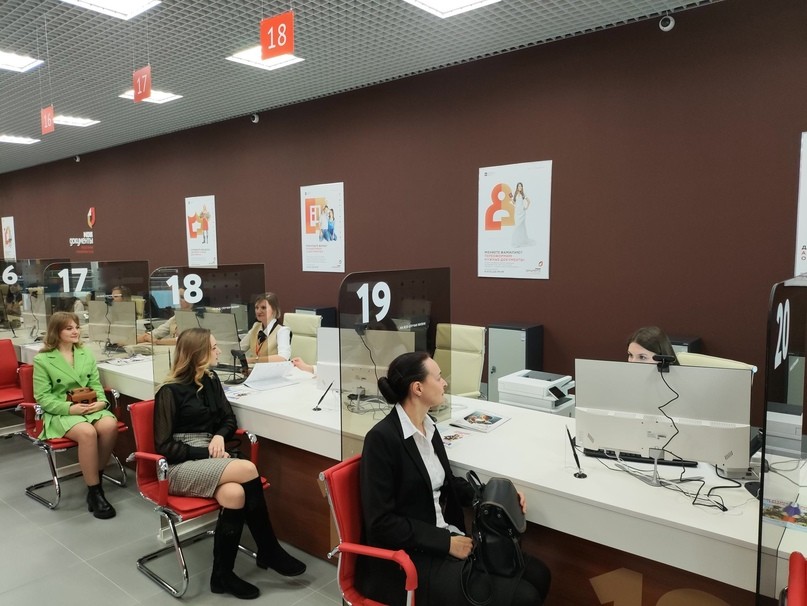
MMC (Multifunctional Migration Center) — a migration services platform supporting operators handling documentation for 2,000+ daily visitors.

My role focused on redesigning complex desktop workflows, reducing operator errors, improving onboarding, and establishing scalable design standards across both products

Years

2020- 2022

Role

UX/UI Designer → Senior UX/UI Designer

Industry

Government Technology

Location

Moscow, Russia

Ownership

UX Audit

Workflow Redesign

Design System

Prototyping

User Testing

Mentoring

IS PRO: Reducing Errors in Citizen
Request Processing
IS PRO: Reducing Errors in Citizen Request Processing
Context

IS PRO is a citizen inquiry management platform used by government operators to process public requests and appeals. The system supports both managers and executors, providing tools for storing applicant information, tracking request history, and managing communication between institutions.

Challenge

The project presented several challenges.

The original system had no design documentation or interface mockups. Direct access to end users was restricted due to organizational constraints. Requirements had to be gathered through close collaboration with business analysts. Additionally, the platform contained more than 50 interconnected workflows that had evolved over time without a unified design framework.

My Role

I joined the project alongside the Design Team Lead and worked closely with analysts throughout the redesign process.

Together, we audited and documented existing workflows and screens, created a complete inventory of the interface from the live product, and mapped user flows and operational scenarios. We also established the platform's foundational design system, then redesigned key workflows and interface patterns to support modern desktop environments.
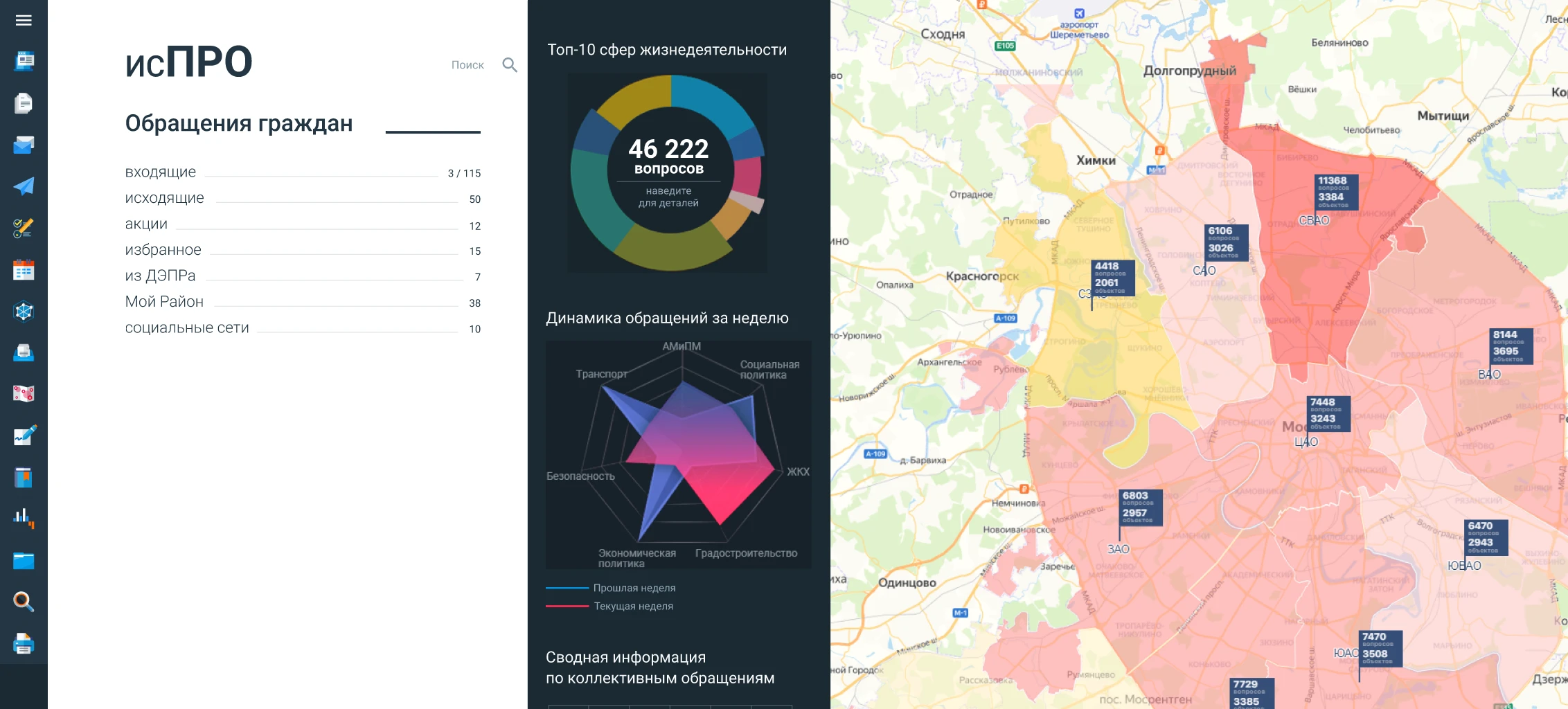
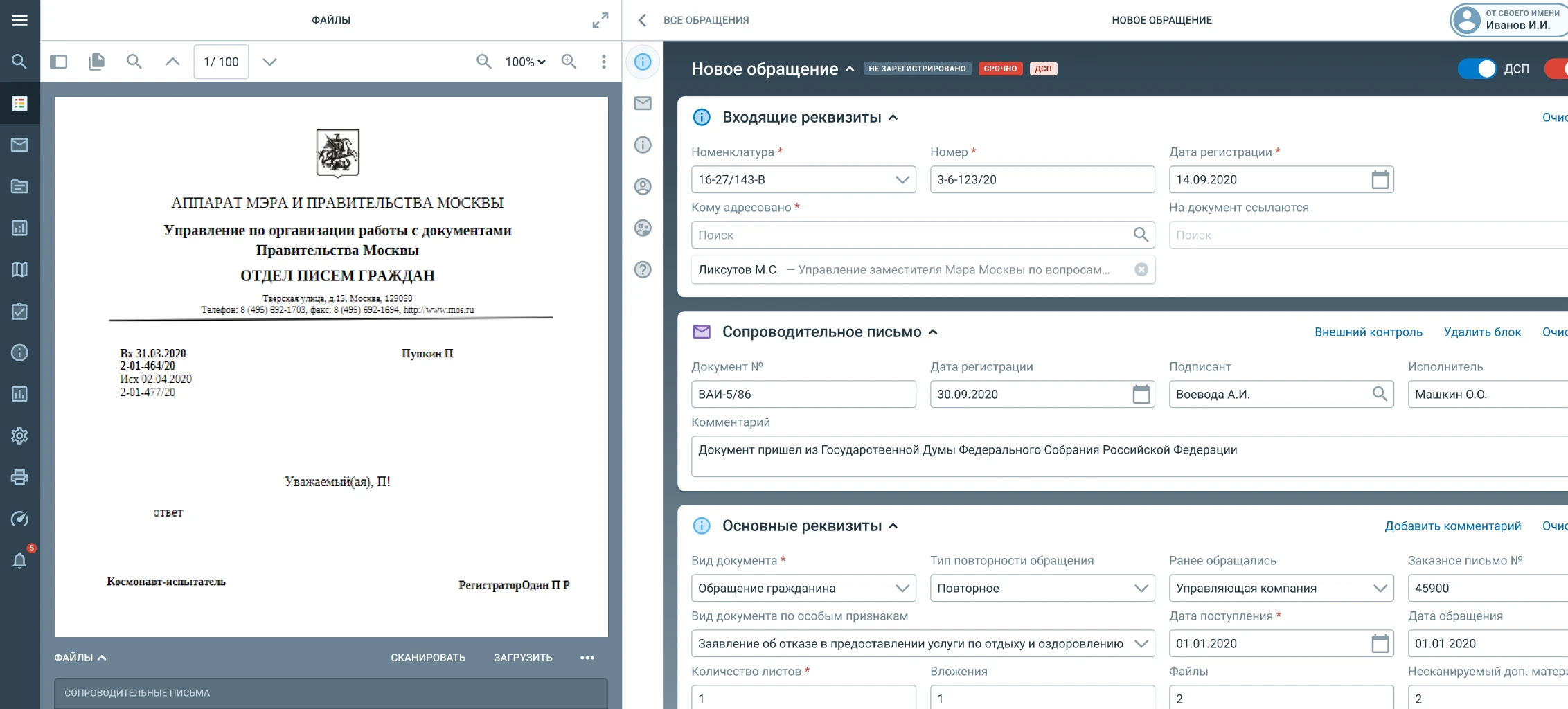
Citizens' Appeals Solution

Designed a unified workspace for managing citizen requests across multiple government institutions. The solution centralized request intake, status tracking, analytics, reporting, and operational oversight within a single interface.

Card-Based User Interface

Introduced a modular card-based architecture that standardized complex forms and information blocks. This approach improved scanability, reduced visual complexity, and enabled reusable patterns across 50+ workflows.

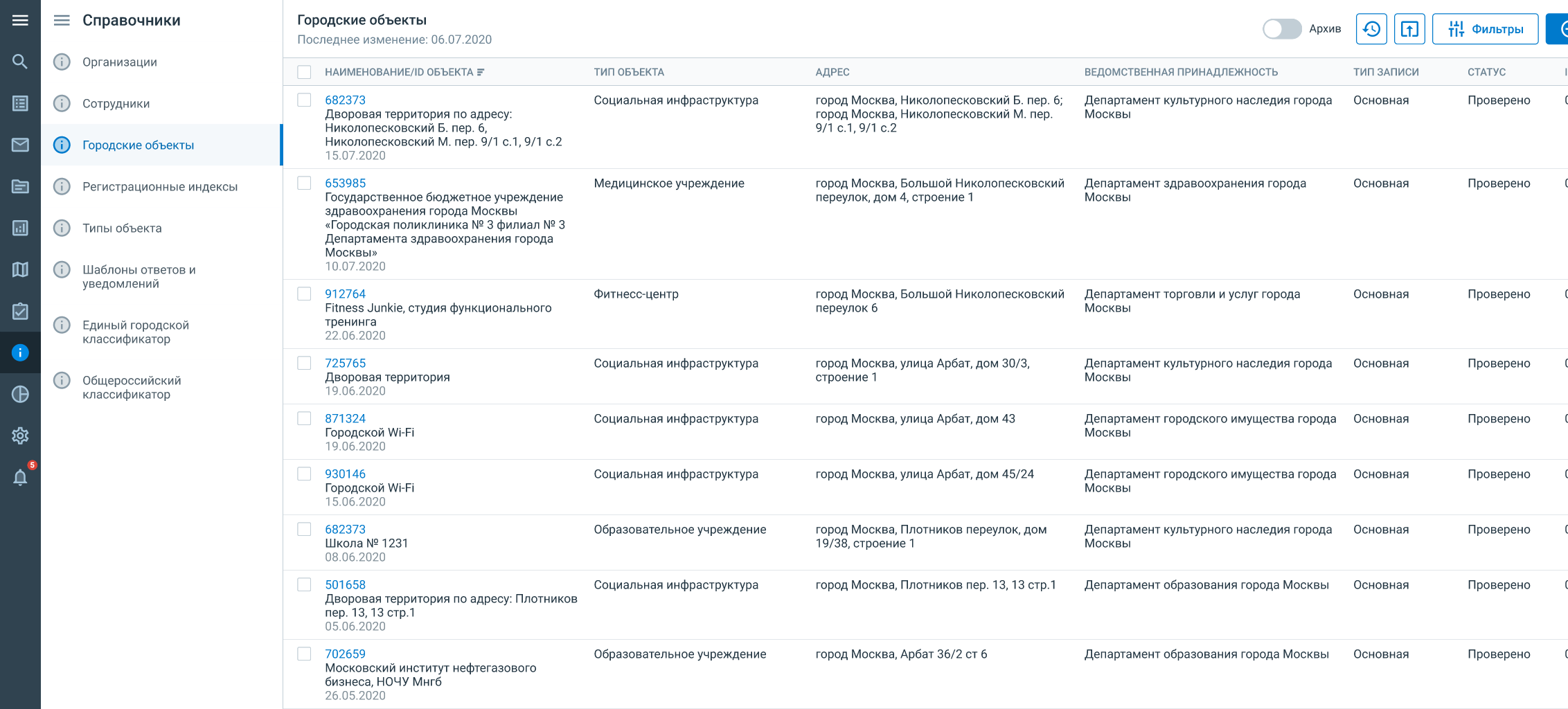
Reference Library

Created integrated reference materials and classification libraries that reduced context switching and helped operators quickly access organizations, locations, and regulatory information while processing requests.

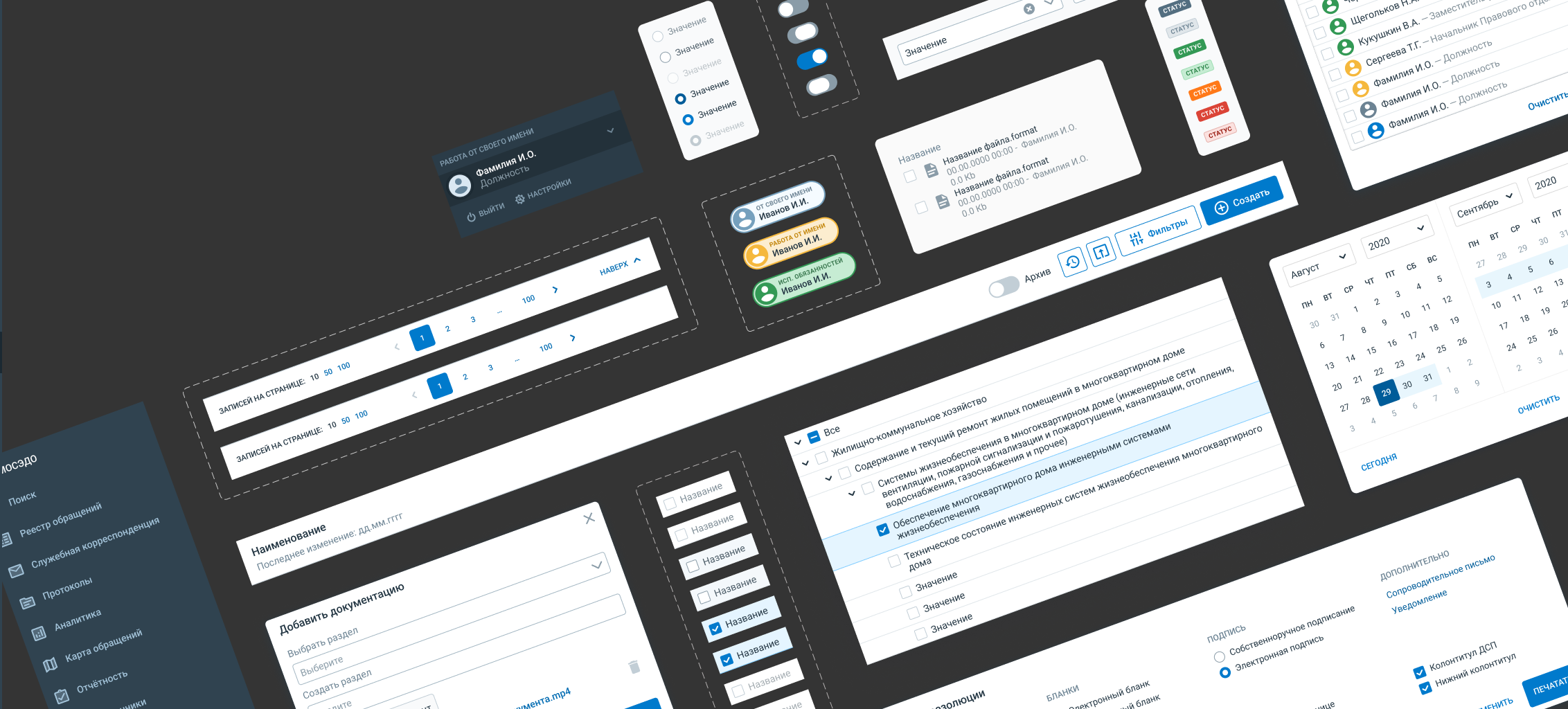
Design System

Established the platform's foundational design system after documenting and cataloging the existing interface. Standardized forms, tables, navigation patterns, and controls created consistency across workflows and supported scalable future development.

Citizens' Appeals Solution

Designed a unified workspace for managing citizen requests across multiple government institutions. The solution centralized request intake, status tracking, analytics, reporting, and operational oversight within a single interface.

Card-Based User Interface

Introduced a modular card-based architecture that standardized complex forms and information blocks. This approach improved scanability, reduced visual complexity, and enabled reusable patterns across 50+ workflows.

Reference Materials Section

Created integrated reference materials and classification libraries that reduced context switching and helped operators quickly access organizations, locations, and regulatory information while processing requests.

Design System

Established the platform's foundational design system after documenting and cataloging the existing interface. Standardized forms, tables, navigation patterns, and controls created consistency across workflows and supported scalable future development.

Citizens' Appeals Solution

Designed a unified workspace for managing citizen requests across multiple government institutions. The solution centralized request intake, status tracking, analytics, reporting, and operational oversight within a single interface.

Card-Based User Interface

Introduced a modular card-based architecture that standardized complex forms and information blocks. This approach improved scanability, reduced visual complexity, and enabled reusable patterns across 50+ workflows.

Reference Library

Created integrated reference materials and classification libraries that reduced context switching and helped operators quickly access organizations, locations, and regulatory information while processing requests.

Design System

Established the platform's foundational design system after documenting and cataloging the existing interface. Standardized forms, tables, navigation patterns, and controls created consistency across workflows and supported scalable future development.

Outcome
Through workflow standardization, interface modernization, and the introduction of a scalable design system, the platform became easier to learn, more efficient to operate, and significantly less error-prone.
0%
Reduction in operator errors
0%
Faster onboarding
0
Workflows redesigned
Multifunctional Migration Center
MMC is a state institution that provides foreign citizens with services related to legal residence, work permits, temporary residence permits, and supporting documentation.

As a Senior UX/UI Designer, I led the design of a desktop application used by state operators managing migration services for more than 2,000 daily visitors. The platform was designed around a one-stop-shop model, allowing operators to process the entire applicant journey within a unified system

Challenge

Migration services relied on fragmented systems, manual paperwork, and complex cross-department workflows. Operators were required to process large volumes of applications, verify and edit documents, collaborate with translators and notaries, and track application progress across multiple stages. The existing process resulted in excessive context switching, duplicated work, and an increased risk of operational errors.

Solution Strategy - Designing Around
Operational Roles
To support the end-to-end migration process, we structured the platform around the responsibilities of each operator group rather than technical system boundaries. This approach reduced context switching and created clear ownership across the service journey.
Product Architecture

The platform was organized into four role-based workspaces supporting different stages of the migration process: Login & Workplace Selection, Migration Specialist Workspace, Translator Workspace, and Notary Workspace.

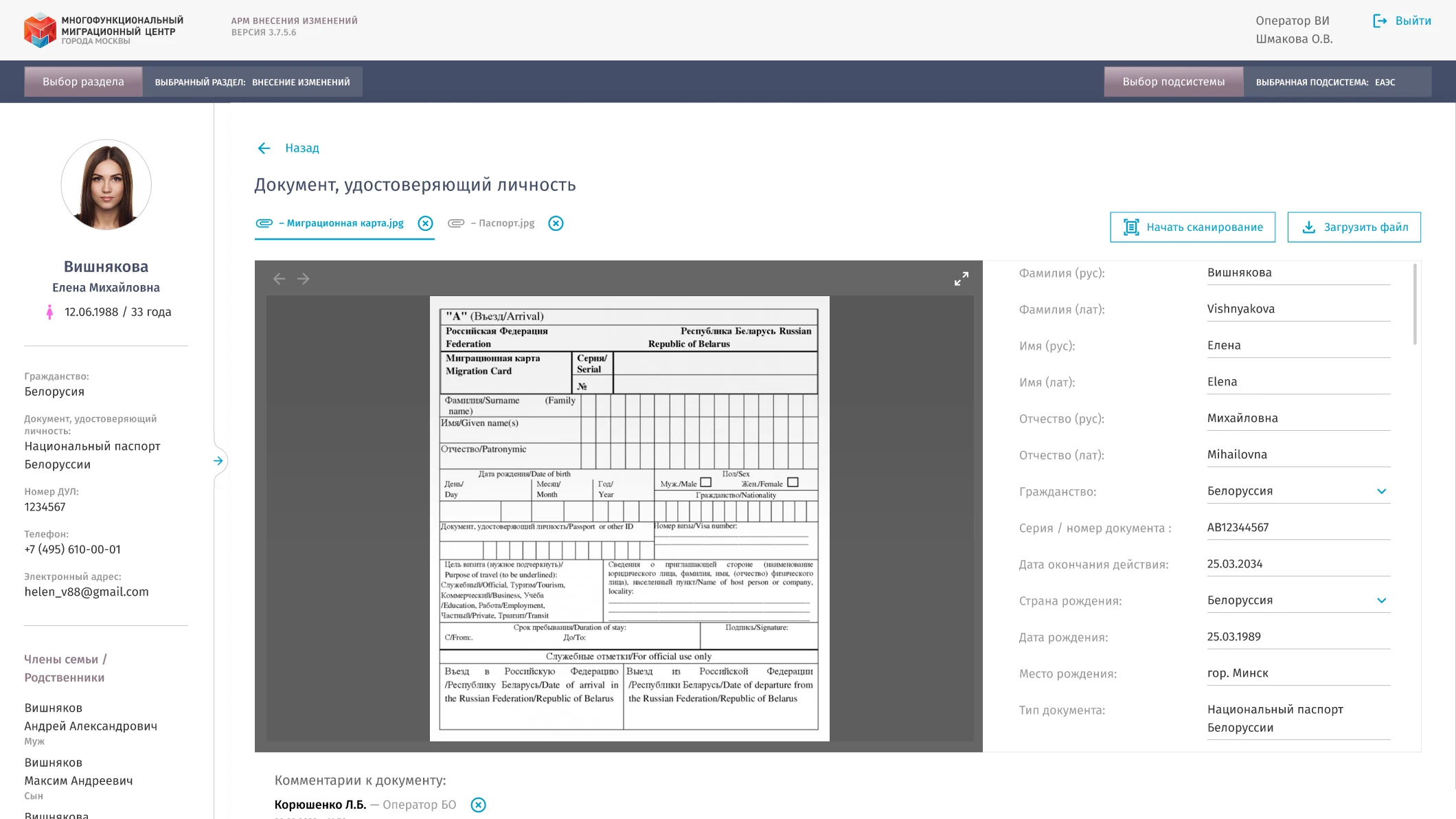
  • Application Registration Flow

    The data entry interface offers a comprehensive overview of the application status, including submitted and missing documents, as well as payment details. It ensures operators stay informed and in control throughout the migration process.

  • Document Editing

    Simplified revisions, enhanced accuracy, and accelerated productivity, with options to scan and upload documents, voice-to-text recognition, and commenting functionality.

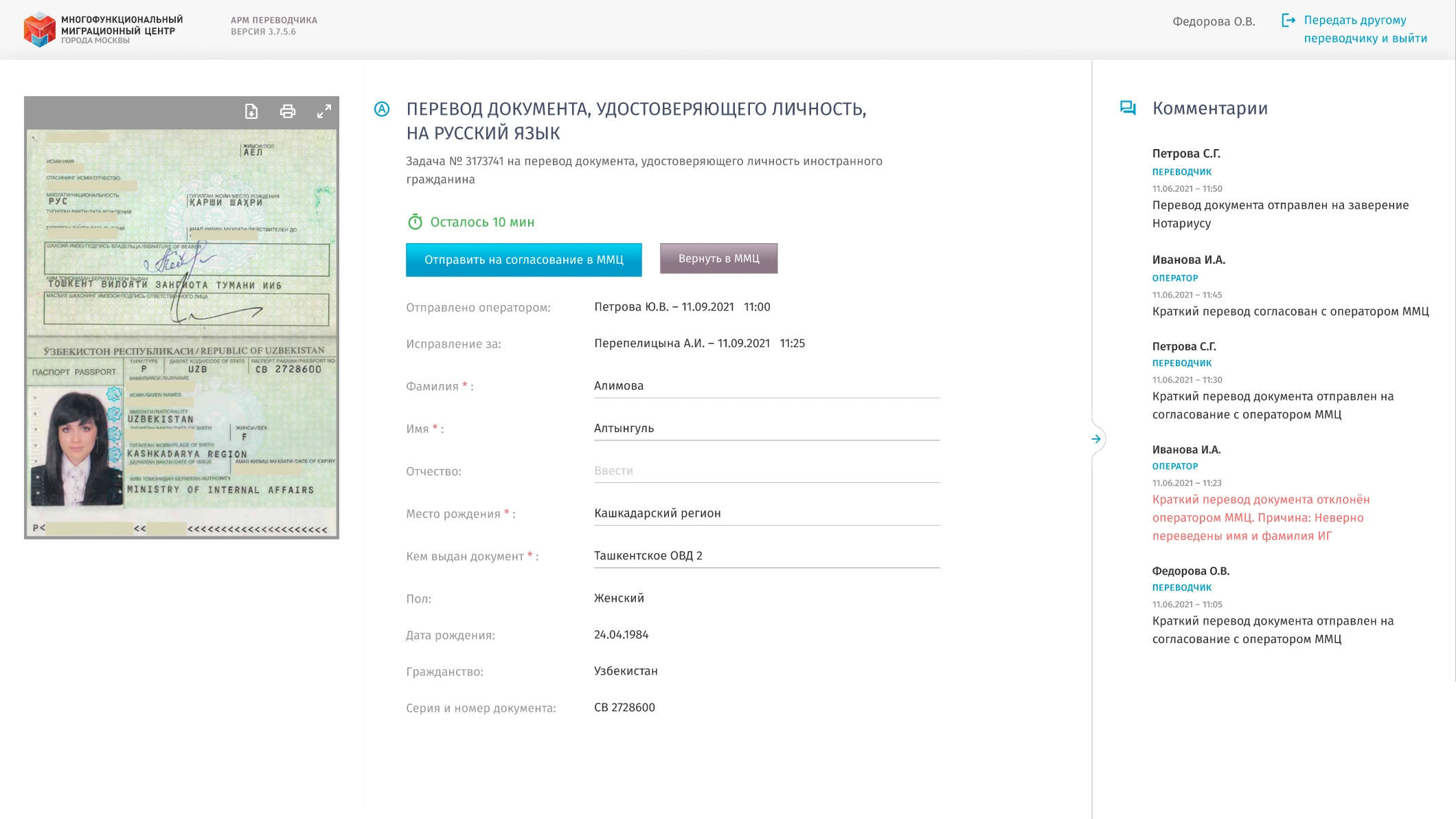
  • Translator Workspace

    The interface enables document scanning and recognition, streamlined input of translation data, submission for approval, and seamless exchange of comments—all designed to enhance collaboration and efficiency

  • Notary Workspace

    The interface includes features for uploading, scanning, and recognizing documents, searching through a categorized list of documents by status, uploading certified documents into the system, and comment exchanges.

  • Application Registration Flow

    Created a centralized operator workspace that consolidated applicant information, document status, service progress, and payment details into a single view. This reduced navigation between systems and improved visibility across the entire application lifecycle.

  • Document Verification & Editing

    Designed document review workflows combining scanned documents with structured data entry. Operators could validate information, make corrections, and manage supporting files without leaving the workspace.

  • Translator Workspace

    Designed a dedicated workspace for document translation and review. The interface supported document recognition, structured translation input, approval workflows, and collaboration between translators and migration specialists.

  • Notary Workspace

    Created a workflow for managing document certification and final approval. Operators could search, filter, review, and process large volumes of translated documents while maintaining visibility into status and ownership.

  • Guided Service Journey

    Introduced a step-based workflow that helped operators track applicant progress through each mandatory service stage. This provided clear status visibility and reduced errors caused by missing documentation or incomplete procedures.

Impact & Outcome

As Senior UX/UI Designer, I led the end-to-end design of the MMC operator platform, collaborating closely with analysts and engineers throughout the project lifecycle.

My key contributions included designing approximately 100 desktop screens, establishing the project's design system, creating interactive prototypes for solution validation, leading interface design from concept to delivery, and mentoring two junior designers during later project phases.
Selected Works

Selected
Works

Case studies shaped around trust, decision clarity, and operational scale.
Let’s make complexity feel clear.

I help product teams turn complex workflows
into sharper flows, stronger systems,
and calmer interfaces for better decisions.

© 2026 Julia Lu

Available for Product Design roles and collaborations

Let’s make complexity feel clear.

I help product teams turn complex workflows
into sharper flows, stronger systems,
and calmer interfaces for better decisions.

© 2026 Julia Lu

Available for Product Design roles and collaborations

Let’s make complexity feel clear.

I help product teams turn complex workflows
into sharper flows, stronger systems, and calmer interfaces for better decisions.

© 2026 Julia Lu

Available for Product Design roles and collaborations